
 EndoGenius Suppressor KitOpen flyer (PDF)
Gene expression · 5 min read
RNA knockdown and RT–qPCR artifacts: the EndoGenius Suppressor approach
Why the level at which you suppress a gene matters. Explore DNA-level suppression with EndoGenius and a validation strategy informed by new research on RT–qPCR artifacts.
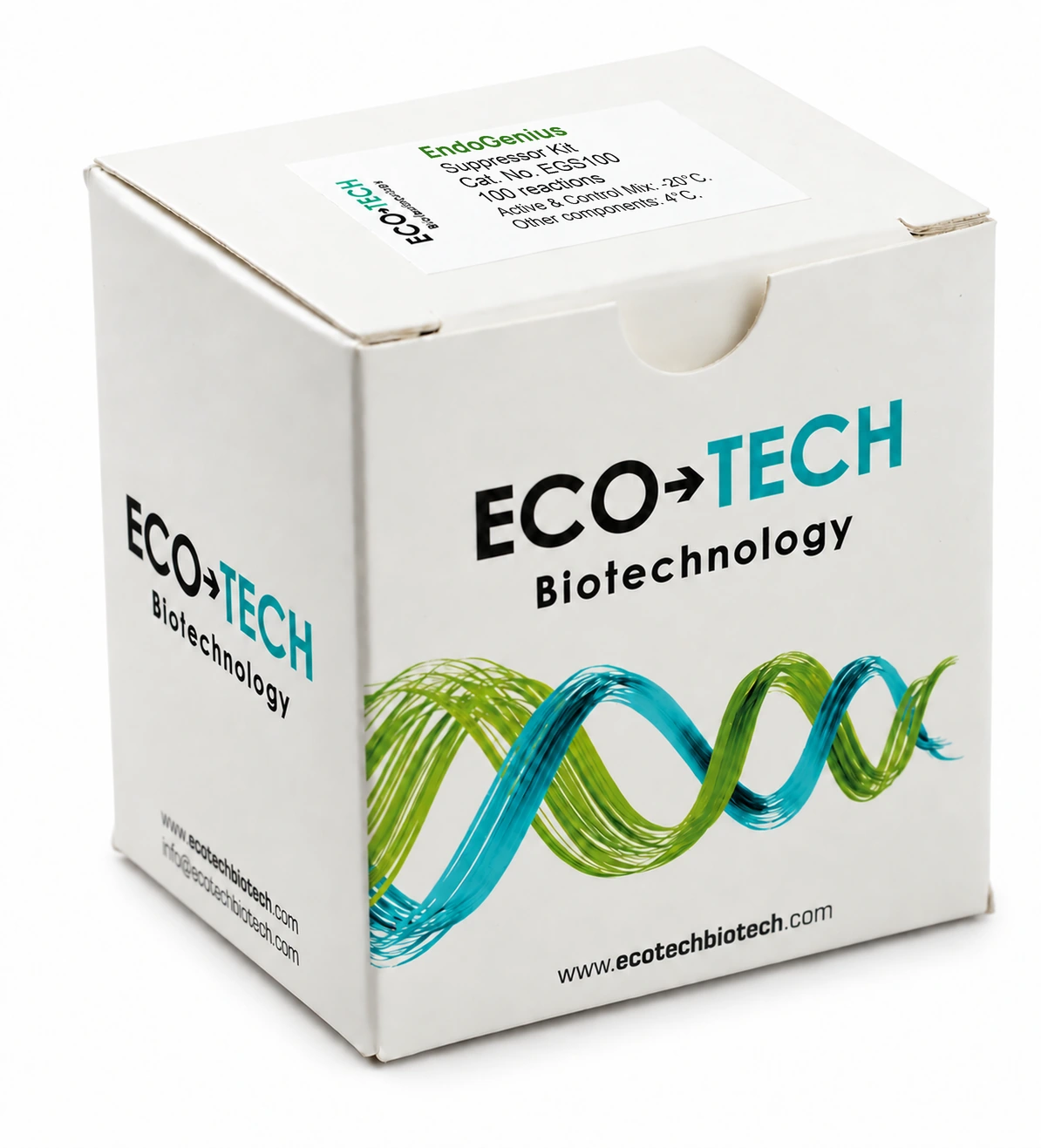
Suppress at the source with EndoGenius
EndoGenius Suppressor Kit is designed to reduce endogenous gene expression at the DNA/transcription level, rather than by directly targeting mature mRNA. This distinction offers a mechanistic advantage when planning gene-suppression studies: the intervention does not depend on binding the target mRNA, the interaction at the heart of the guide-RNA-induced reverse-transcription artifact described below. Choose EGS50 for 50 reactions or EGS100 for 100 reactions, and review the EndoGenius datasheet for the supplied Active Mix, Control Mix and application procedure.
A lower RT–qPCR signal is not always less RNA
Watkins, Zhu and Wu reported that guide RNAs can remain in RNA preparations and obstruct reverse transcription. Less cDNA is then produced from the target, making RNA-targeting CRISPR knockdown look stronger than it really is. Their experiments examined Csm, PspCas13b and CasRx systems. Even RNase-inactive controls could appear to suppress a target when measured with susceptible amplicons, despite the absence of corresponding protein-level knockdown.
Why amplicon position and RT chemistry matter
Amplicons spanning the guide-binding site and those nearby on its upstream side were susceptible to the artifact. Downstream amplicons and more distant upstream amplicons were less affected in the tested conditions. The authors tested ultraMarathonRT, a processive reverse transcriptase with strong strand-displacement activity, which mitigated the artifact. These findings support comparing amplicon positions and RT chemistry instead of interpreting a single assay in isolation.
The EndoGenius distinction—and what it does not prove
Because EndoGenius Suppressor acts at the DNA/transcription level rather than targeting mRNA, it offers a different route to studying loss of gene expression. It is not designed to create the target-mRNA–guide-RNA interaction responsible for the artifact in this study. This is a mechanism-based rationale, not a demonstrated head-to-head performance advantage: Watkins and colleagues did not test EndoGenius or EcoScript. DNA-level suppression does not eliminate the need to assess RNA quality, carryover inhibitors, RT efficiency and assay specificity. The paper directly tested RNA-targeting CRISPR; implications for siRNA, shRNA and antisense workflows require evaluation in their own experimental context.
Build a convincing EndoGenius experiment
Use the matched EndoGenius Suppressor-Control preparation specified in the kit protocol and include untreated cells where appropriate. Plan biological replicates and a time course suited to the target and cell model. Measure target expression with validated assays and stable reference genes. Where possible, pair RNA measurements with target-protein abundance and a relevant functional readout. A viability change alone does not establish target-specific suppression; interpret it together with expression and protein results. The kit datasheet provides examples, not a guaranteed suppression percentage for every target.
For RNA-targeting workflows: compare before concluding
If guide RNAs are present, compare conventional RT with a processive, strand-displacing enzyme using matched RNA aliquots. Evaluate amplicons spanning, upstream and downstream of the guide-binding region. Keep RNA input and qPCR conditions consistent, check amplification efficiency, and include no-RT and no-template controls. A guide-RNA spike-in comparison can help investigate interference. Confirm the result with an independent measurement, such as a suitable protein assay. No-RT and no-template controls are useful but do not, by themselves, exclude RT inhibition.
Connect suppression, measurement and interpretation
Explore EndoGenius Suppressor Kit for target-specific suppression studies and discuss your gene and cell model with EcoTech. The Housekeeping Gene Finder supports reference-gene selection, while the ΔΔCt Calculator helps organize relative-expression analysis after assay assumptions have been checked. EcoScript cDNA synthesis products and ClearPeak gene-expression assays are related workflow options; their listing here does not imply that they were evaluated in the Nature Biotechnology study or proven to overcome its artifact.
Related tools
Related EcoTech products
 NutriCulture Cell Viability Detection Kit-8CVDK-8
 EndoGenius Suppressor KitEGS50
 EcoScript 5x First Strand cDNA Synthesis KitERT50
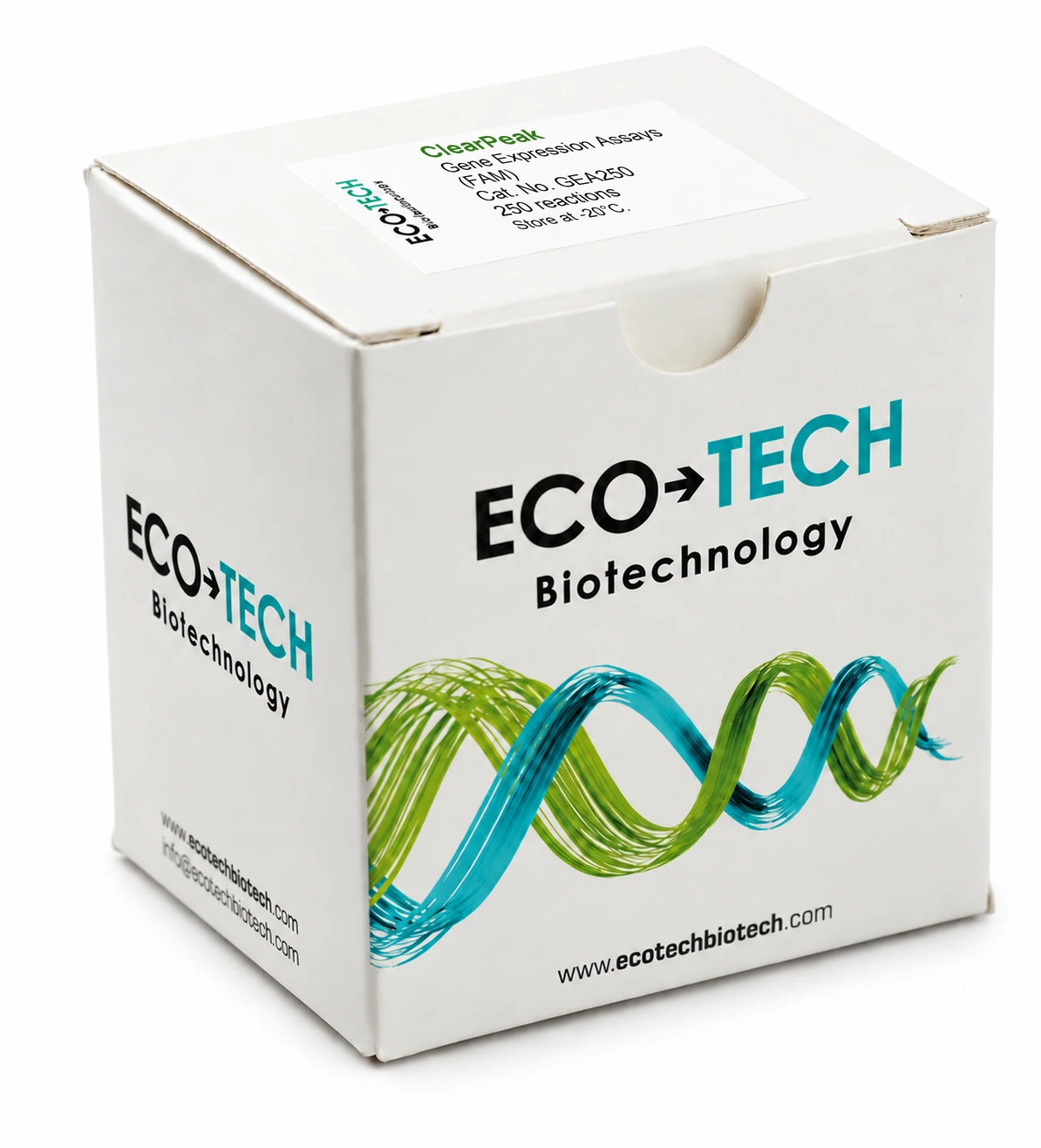 ClearPeak Gene Expression Assays (FAM)GEA250
Source flyers
EndoGenius Suppressor KitOpen flyer (PDF)Research context and EcoTech product guidance are presented separately. EndoGenius Suppressor and EcoScript were not evaluated in the cited study. For research use only.